
How to Choose Wearable Works of Art for Gift Boutiques
Last Updated: November 8, 2026
Quick Summary
Choose wearable works of art by vetting makers on consistency, communication, packaging, and terms, then testing with a small first order across price bands. Confirm named metals and honest gemstone descriptions, and price each piece from cost adjusted for rarity, story, and turn velocity.
- Wearable art is jewelry or clothing where the maker's creative vision shapes the piece as much as function.
- Evaluate suppliers on consistency, communication, packaging, and terms, and get each point in writing.
- Treat the first order as a test: small assortment, track sell-through one cycle, reorder only what moves.
- Review sell-through by maker and price band monthly, and mark down pieces that sit past two cycles.
- Plan inventory around occasions like birthdays and anniversaries, and keep under-$100 options for impulse buys.
Why Wearable Works of Art Belong in Your Gift Boutique
Wearable works of art are the pieces your customers touch, try on, and remember long after they leave the shop. At Alene's Adornments, I have spent 16 years handcrafting one-of-a-kind jewelry in my Arizona studio. A gift boutique that stocks handmade jewelry, silk scarves, and textile art sells something a big-box shelf never can: a story.
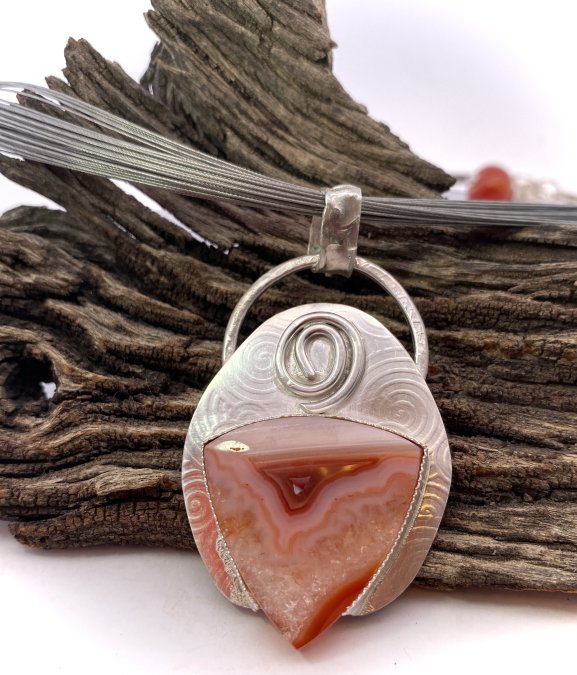
Carnelian necklace and pendant
The reason is simple. Shoppers who want a gift with meaning are not hunting for another mass-produced accessory. They want a piece that feels chosen, not manufactured. That is the entire case for carrying wearable art.
What Makes a Piece Wearable Art
Wearable art is jewelry or clothing designed with clear artistic intention, where the maker's creative vision shapes the piece as much as its function does. It is portable sculpture you can put on. The difference between an artful cuff and a plain one usually comes down to three things:
- Artist-designed construction: the maker's hand is visible in the form, not just the finish.
- Material honesty: real sterling silver, copper, and genuine gemstones rather than plated imitations.
- A point of view: a design story, whether drawn from nature, folklore, or personal symbolism.
When a customer asks why a bracelet costs more than a department-store version, that story is your answer.
How to Choose Handmade Jewelry That Sells
Choosing handmade jewelry that sells starts with knowing what your customers reach for. A common mistake is buying what impresses you rather than what your shopper will actually wear. Before you commit to a vendor, run every piece through the same filter.
For a deeper quality test you can apply piece by piece, see how to tell if artisan jewelry is high quality. It walks through the construction details that separate lasting work from pieces that tarnish or fall apart.
Evaluation Checklist for Buyers
Use this checklist before any order leaves your shortlist:
- Are the metals named specifically, such as sterling silver, fine silver, or copper?
- Are gemstones described honestly, including origin and treatment?
- Is the clasp, ear wire, or cuff structure handmade or visibly reinforced?
- Does the maker provide care instructions?
- Is the piece one of a kind or part of a limited run?
- Does the price reflect the work, and can you explain why to a customer?
Artist-Made Jewelry: Building Relationships With Makers
Artist-made jewelry sells better when you can talk about the person behind it. I have found that the strongest wholesale relationships start with a real conversation, not a catalog download. Ask about the artist's process, how long a design takes, and what inspires the collection.
For practical guidance on working with independent makers, handmade shopping tips covers how to buy handmade goods and build trust with small studios. Treat your makers as partners and they will give you first access to new work.
Sterling Silver Gemstone Jewelry: Materials and Quality
Sterling silver gemstone jewelry holds up when the metal and the stone are matched with care. Sterling silver is an alloy, and it can tarnish over time without proper care.
Because care questions come up constantly at the counter, how to care for handmade sterling silver jewelry gives you a straightforward reference to share. A piece like the Buried Treasure amethyst and moonstone earrings shows how faceted AAA amethyst and moonstone sit in handmade sterling settings, and it comes with a care card you can hand to the buyer.

Wholesale Sourcing, Minimum Orders, and Supplier Evaluation
Wholesale sourcing rewards patience, but it also rewards a process. Most guides tell boutique owners to "find makers you trust" and stop there. The practical work is in how you vet a studio, structure a first order, and protect your shop's position once a maker becomes a draw.
Vet the Maker Before the First Order
Evaluate a supplier on four points, and get each in writing:
- Consistency: can they repeat a design, or is every piece truly one of a kind? Ask how they handle a reorder and what variation is normal.
- Communication: do they answer questions about materials and timelines promptly, and do they flag delays before you have to ask?
- Packaging: is the piece gift-ready, with a story card and care instructions you can hand to the buyer?
- Terms: what are the minimums, lead times, payment schedule, and reorder process?
Structure the First Order as a Test
Treat your first order as a test rather than a commitment. Order a small assortment across price bands, track sell-through for one cycle, and reorder only what moves.
Ask About Exclusivity and Territory
If a maker's work becomes a signature for your shop, ask whether they offer any exclusivity by territory or channel, for example, limiting the same design to a set number of boutiques in a region. Most independent studios cannot promise full exclusivity, but many will agree to a first-look window on new collections or a short hold on a design. Get any such arrangement in writing.
Verify Handmade Claims and Provenance
Ask how the maker documents their process: photos of the studio, material receipts, and a consistent story about where stones and metals come from. Provenance is not just an ethical check, it is merchandising material. A short maker bio and a care card beside each piece let the shopper read the intent, and they support the price you set.
Buried Treasure Sterling Faceted Amethyst and Moonstone Earrings. 1 3/4" long →
Keep the Relationship Warm
Treat your makers as partners. A short check-in before each buying cycle, a note when a piece sells well, and fair, on-time payment will do more for your access to new work than any catalog download. That relationship is the part of wholesale sourcing no competing guide can replicate for you.
Before committing to a studio, evaluate every supplier on these four points and get each in writing.
|
Evaluation point |
What to confirm |
|---|---|
|
Consistency |
Can they repeat a design, and what variation is normal |
|
Communication |
Prompt answers on materials and timelines, delays flagged early |
|
Packaging |
Gift-ready, with story card and care instructions |
|
Terms |
Minimums, lead times, payment schedule, reorder process |
Pricing, Margins, and Inventory Planning
Pricing wearable art is where boutique owners most often guess. The top-ranking articles on this topic stop at "mark it up and tell the story." That advice is not enough to run a category. What follows is the operational layer those guides skip: how to set a defensible retail price, how to plan inventory around real sell-through, and how to keep cash moving in a small shop.
Set Price From Cost, Then Adjust for Rarity
From there, adjust along three axes:
- Rarity: one-of-a-kind and limited-run pieces can carry a higher multiple than repeatable designs, because the shopper cannot comparison-shop the exact item.
- Story and provenance: a piece with a documented maker, named materials, and a care card supports a higher price than an anonymous equivalent.
- Turn velocity: slow-moving statement pieces need a higher margin to justify the shelf space they occupy; fast-moving entry-price items can run leaner.
Watch out: if you cannot explain the price gap to a customer in one sentence, the markup is probably too aggressive for your shopper, or the piece is wrong for your assortment.
Track Sell-Through, Not Just Sales
Sell-through is the share of units you received that you actually sold in a given period. A common pattern among small boutiques is to judge a category by total revenue, which hides dead stock. Instead, review sell-through by maker and by price band every month. Pieces that sit past two selling cycles should be marked down or moved to a clearance display rather than left to occupy prime real estate.
Plan Inventory Around Occasions and Open-to-Buy
Occasion-based planning beats calendar-season planning for gift boutiques, because your shopper buys for birthdays, anniversaries, graduations, and holidays rather than for a fashion season. Build small capsules around those occasions and keep a handful of entry-price options for impulse buys.
Keep a Simple Margin and Inventory Worksheet
At minimum, track per SKU: wholesale cost, retail price, units received, units sold, sell-through percentage, and days on hand. That worksheet is what turns pricing from a guess into a repeatable decision, and it is the single operational tool most competing guides never mention.
Merchandising Wearable Art: Display Plans for Small Boutiques
Merchandising wearable art means treating your display like a small gallery. Group pieces by story or color, use height and texture, and keep the artist's card beside each item so the shopper can read the maker's intent.
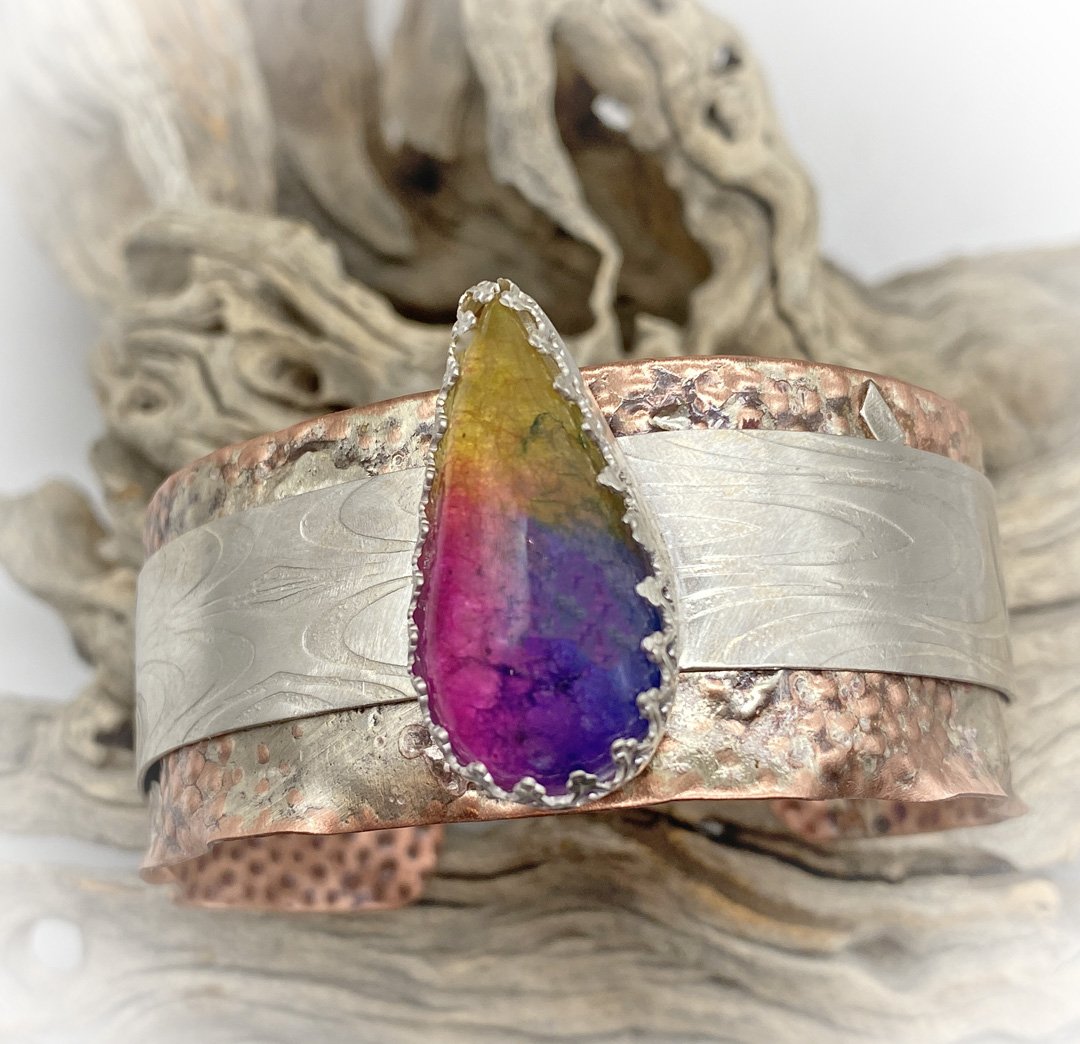
A piece like the Memories of Childhood Cuff gives you a natural focal point. Place it on a riser, angle the light, and let the mixed-metal texture do the work.
One-of-a-Kind Handmade Jewelry Gifts: Assortment and Occasion Planning
One-of-a-kind handmade jewelry gifts sell best when you plan the assortment around the occasion the shopper is buying for. Build small capsules for birthdays, anniversaries, and milestone gifts, and keep a handful of under-$100 options for impulse buys. The Cloud Dreams plume agate ring and the matching Cloud Dreams wave earrings show how a themed collection can anchor a gift display.

For a fuller planning guide, one-of-a-kind handmade jewelry gifts breaks down assortment ideas by occasion. And to see a finished wearable art piece in context, the Sterling and Amethyst Ring from the Sacred Spiral Collection is a useful reference for display and assortment decisions.
Start Curating With Confidence
The boutiques that win with wearable art are the ones that treat curation as a craft. Pick makers whose work you can explain, price it honestly, and display it like the art it is.
If you want a partner who understands that approach, I would love to help. Alene's Adornments offers one-of-a-kind jewelry designs, handcrafted pieces made in my Arizona studio with fine silver, gold, and genuine gemstones, and personalized service through in-person or Zoom consultations. Join my Collector's List today and get first look at new work before it reaches a shop floor.

Frequently Asked Questions
What makes jewelry a wearable work of art?
A piece earns that label when an artist makes the design decisions, not a production line. Look for hand-fabricated components, a named maker, and materials chosen for the design rather than the lowest cost. A cuff like the Merlins' Magic copper and sterling cuff, with its fused metals and dendritic opal, shows the artist's hand in the texture and setting. Wearable works of art also carry a story, often printed on a romance card, that gives the buyer something to talk about when they wear it.
How can you tell if handmade jewelry is high quality?
Check the clasp, ear wires, and stone settings first, since those fail earliest. On sterling pieces, look for a stamp and ask the artist what the base metal is. Ask how the finish is protected, because copper and brass need a treatment to slow oxidation. A maker who answers these questions directly and offers care instructions, like using a jewelry or microfiber cloth to keep a design bright, is usually building pieces that last.
What materials are commonly used in handmade artisan jewelry?
Artists work in fine silver, sterling silver, gold, steel, and copper, often combining two or three in one piece. Gemstones include faceted amethyst, moonstone, plume agate, and dendritic opal. Mixed-metal work, where copper is fused with sterling, gives a piece a distinct look you will not find in mass-produced lines. Ask which materials are solid versus plated, because that answer affects both price and how the piece ages with wear.
How should you care for sterling silver and gemstone jewelry?
Use a jewelry or microfiber cloth to keep the design bright. When you sell a piece, pass the maker's care card along with it so the customer knows exactly what to do at home.
