
How to Tell If Artisan Jewelry Is High Quality
Last Updated: October 11,2026
How to Spot Quality Craftsmanship in Jewelry: 7 Inspection Points
Artisan jewelry is handmade by an individual maker, not stamped out by a machine, and the difference shows up in seven places you can check yourself. At Alene's Adornments, I’ve spent 18 years making one-of-a-kind pieces in my Arizona studio, so I know exactly where shortcuts hide. Below, I will show you how to tell if artisan jewelry is high quality before you spend a dime.
A common mistake is judging a piece by its shine alone. Polish can hide a lot. Structure cannot.
Here's what separates a piece built to last from one that falls apart in a drawer:
- Solder joints: Look for smooth, seamless connections. Lumpy or gray joints crack over time.
- Finish: Run your finger along the edges. Quality pieces feel smooth everywhere.
- Clasp and findings: A flimsy clasp on a heavy necklace is a warning sign.
- Stone settings: The metal should hug the stone with no gaps or wiggle.
- Weight: Solid silver and gold feel substantial in your hand.
- Symmetry: Handmade isn't perfectly machine-even, but it should look intentional.
- Maker's mark: A stamped signature means the maker stands behind the work.
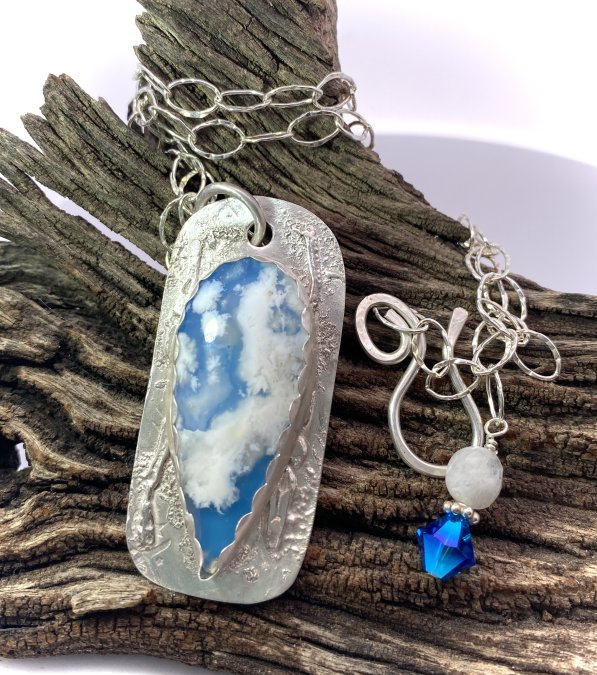
Pendant Amethyst Geode Cholla
Check the Solder Joints and Connections
Solder joints are where metal pieces meet, and they're the first place cheap work fails. A good joint is smooth, matches the surrounding metal color, and shows no gap. A bad one looks lumpy, gray, or pitted. This is a skill I perfected over time. Each design I create reflects that skill.
Pick up a piece and tilt it under a light. If you see cloudy patches around a connection, the maker overheated the metal. That spot is now weak. The Jewelers of America guide to jewelry care and quality explains how proper construction affects how long a piece lasts.
Examine the Finish and Surface Details
A quality finish is even from every angle. Turn the piece over. The back should get the same care as the front.
Watch for these finish flaws:
- Sharp edges that catch on fabric
- Dull or scratched areas on a "new" piece
- Uneven texture that looks accidental, not designed
- Rough spots inside a ring band or behind a pendant
Handmade vs. Mass-Produced Jewelry: What the Differences Look Like
Handmade jewelry varies slightly from piece to piece, while mass-produced jewelry is identical every time. That variation is a feature, not a flaw. A hand-forged ring carries tiny hammer marks and small differences that a factory stamp can't copy.
Mass-produced pieces usually show:
- Perfectly identical copies with zero variation
- Lightweight hollow construction to save metal
- Glued-in stones instead of set ones
- Plating that wears through to base metal
Handmade pieces usually show the opposite. They feel heavier. The texture has rhythm. No two are exactly alike, which is the whole point of one-of-a-kind handmade jewelry gifts.
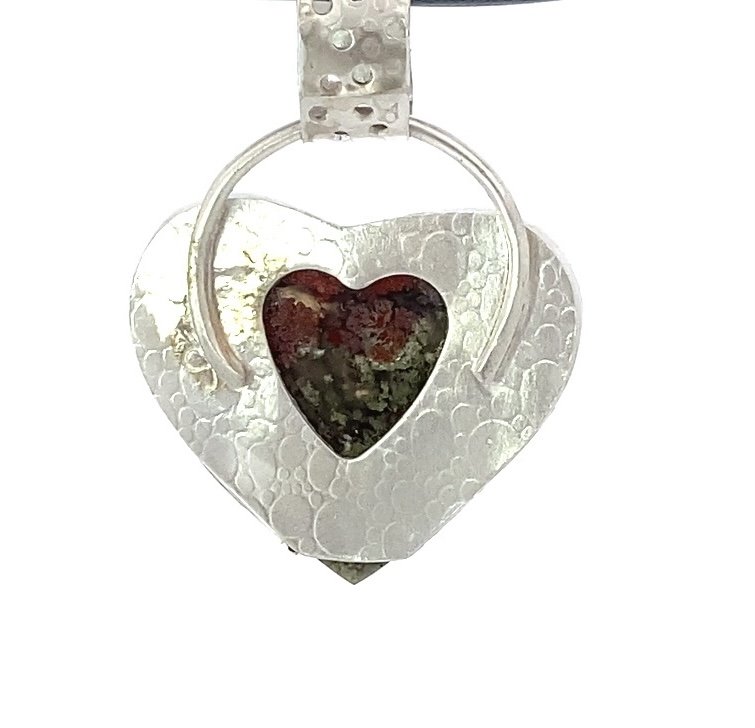
The Pendant below highlights one of the features I use in many of my pieces. A cut out heart design.
How to Evaluate Gemstone Quality in Artisan Jewelry
Gemstone quality comes down to four things: color, cut, clarity, and how well the stone is set. You don't need a lab report to judge most of it. Your eyes and a bright light will do.
Start with color. A natural turquoise or malachite stone should have depth and variation, not a flat, painted look. Next, check the setting. The metal should hold the stone tight with no gaps where a fingernail can slip in.
Then ask one question: is this stone natural, treated, or synthetic? Honest makers answer without hesitation. The Gemological Institute of America's gem encyclopedia is a solid reference for comparing stone types before you buy.
- Natural: mined stone, minimal treatment
- Treated: real stone, stabilized or dyed for durability or color
- Synthetic: lab-created, often sold without disclosure
What to Look for in Unique Artisan Jewelry: Materials and Maker's Marks
Materials and maker's marks tell you who made a piece and what it's made of. Both matter more than any marketing claim.
Look for a stamp inside a ring band or on the back of a pendant. "925" means sterling silver. .999 means fine silver."14K" or "18K" means gold content. A maker's mark, usually initials, means a real person signed off on the work. Each of my designs carries my makers mark.
Metal quality you'll commonly see:
Mark |
Meaning |
What It Tells You |
|---|---|---|
925 |
Sterling silver |
92.5% silver, durable for daily wear |
14K / 18K / 22K |
Gold content |
Higher number means more gold |
GF |
Gold filled |
Gold bonded to base metal, wears well |
.999 |
Fine silver |
Nearly pure silver, softer and brighter |
Gold filled jewelry, for example, bonds 14K gold to a brass base. It won't tarnish or wear off the way plating does. That's a real difference you can feel in how a piece ages.
When Imperfections Signal Quality in Artisan Jewelry
Small imperfections often prove a piece was made by hand, not a machine. Hammer marks, slight asymmetry, and tiny tool textures are signatures of handwork. The trick is telling a purposeful mark from a defect.
Purposeful marks look deliberate. They repeat in a pattern. A defect looks random, like a gouge, a crack, or a stone that shifts in its seat.
- Good imperfection: even hammer texture across a cuff
- Good imperfection: a hand-cut stone with slight natural variation
- Bad defect: a visible crack near a solder joint
- Bad defect: a prong that doesn't touch the stone
Questions to Ask Before Buying Artisan Jewelry
Ask direct questions and listen for direct answers. A confident maker welcomes them. A vague answer usually means a vague process.
Ask these before you buy:
- What metals and stones are in this piece?
- Is the stone natural, treated, or synthetic?
- How should I care for it, and what should I avoid?
- What's your return policy if it doesn't fit?
- Can you adjust or resize this design?
My Sterling Silver Ring from the Sacred Spiral Collection is a good example of what to look for. It's smooth, solid, and made to wear every day. The spiral stands for growth and evolution, and it comes gift wrapped in a deluxe ring box. That's the kind of detail you can check against every point above.
For a pop of color, my Sterling and Natural Turquoise Ring pairs sterling silver with a natural turquoise stone. Or if you prefer warm tones, the Gold Fill Pendant in the Sacred Spiral Collection is 2 inches long on a 20-inch chain that can be shortened. Each one is handmade in my Arizona studio.
Frequently Asked Questions
How can you tell if handmade jewelry is high quality?
Look for smooth solder joints with no gaps or pits, a clean finish inside and out, and consistent metal color throughout. High-quality artisan jewelry also has a maker's mark or signature stamp. Ask about the materials: sterling silver should be stamped 925, and gold fill should be marked 14K GF. If the piece uses natural gemstones, the setting should hold the stone securely with no visible glue.
What should I look for in artisan jewelry craftsmanship?
Start with the clasp and connections: they should open smoothly and feel solid, not flimsy. Check that stone settings are tight and the metal around them is polished, not rough. Turn the piece over. The back should look as finished as the front. Look for even patina or oxidation, which shows intentional design rather than neglect. If you can, ask the maker about their process and how they handle repairs.
How can you tell if jewelry is handmade or mass-produced?
Handmade jewelry often has slight variations between pieces, while mass-produced items are identical. Look for tool marks, which are normal in hand-fabricated pieces but absent in cast or stamped jewelry. Mass-produced pieces often have seams from molds or overly uniform textures. Also check the weight: handmade pieces tend to be heavier because they use more metal. Ask the seller directly, and look for a maker's mark or signature.
Should handmade jewelry have small imperfections?
Small imperfections can be a sign of handcrafting, but they should not compromise structure or comfort. Tool marks, slight asymmetries, and variations in texture are normal in handmade pieces. However, cracks, loose stones, sharp edges, or poorly soldered joints are defects, not character. A quality artisan will stand behind their work and offer repairs if something fails. If an imperfection bothers you, ask the maker about it before buying.
Telling real quality from good marketing takes a trained eye, and even seasoned buyers miss things. That's why we invite you to see the work up close before you commit. Alene's Adornments offers one-of-a-kind designs, high-quality fine and sterling silver, gold, and genuine gemstones, plus personal consultations in person or over Zoom to help you find the right piece. Join my Collector's List today and get first look at new work as it comes out of the studio.