
How to Spot Fake Turquoise Jewelry: 7 Tests
Why Fake Turquoise Floods the Market
Counterfeit turquoise is widespread because the gemstone's popularity and high price make it an attractive target. Fakes include dyed howlite, reconstituted turquoise, plastic-filled pieces, and synthetic resins.
One of a Kind Handmade Jewelry Gifts: 2026 Guide
At Alene's Adornments, with 18 years of design experience handcrafting jewelry in our Arizona studio, I’ve learned that you don't need to be a gemologist to spot fake turquoise jewelry.
Real turquoise is a porous stone with Mohs hardness of 5-6. Imitations like howlite and magnesite are softer and absorb liquids differently. Understanding these properties helps you identify authentic pieces.
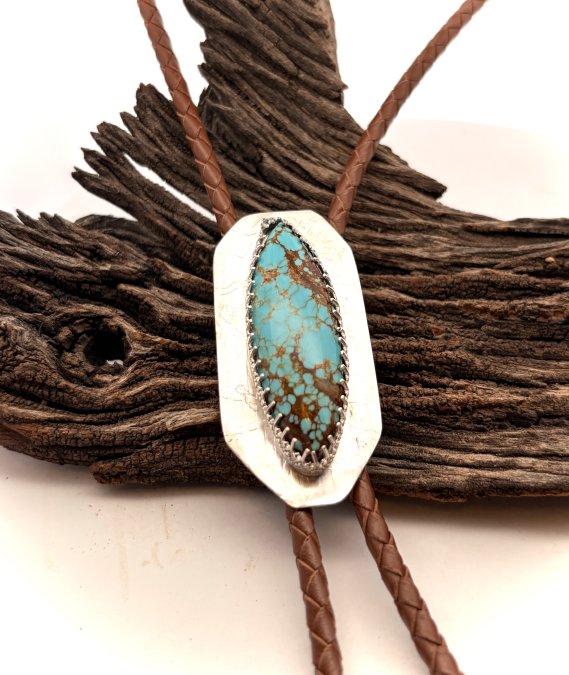
Test 1: Visual Inspection of Color and Matrix
Visual examination is the first step to spot fake turquoise. Real turquoise displays color patterns and matrix characteristics that are nearly impossible to replicate perfectly. This Turquoise bolo tie features natural turquoise from a Nevada Mine.
What authentic color looks like
Authentic turquoise ranges from sky blue to blue-green with natural color variation. No two pieces are exactly alike, with darker or lighter patches forming naturally from copper content.
Fake turquoise, especially dyed howlite, has uniform color throughout. If a stone looks perfectly uniform, that's a red flag, natural stones have subtle variations.
How to identify turquoise matrix patterns
The matrix is the host rock containing turquoise, appearing as brown, tan, or black veining. In natural turquoise, these patterns are random and organic-looking.
Imitation turquoise often has matrix patterns that are too perfect or geometric. Reconstituted turquoise shows seams or unnaturally straight lines where fragments join.
Real turquoise matrix looks organic and naturally formed, not artificially placed or geometric.
Test 2: The Acetone and Nail Polish Remover Test
The acetone test is one of the most reliable at-home tests. Acetone reacts differently with real turquoise than with dyed imitations.
Dampen a cotton swab with acetone or nail polish remover and gently rub a hidden part of the stone. Real turquoise won't transfer dye to the cotton; dyed howlite and magnesite will leave color immediately.
Caution: acetone can damage adhesives and plastic. Test only the stone itself on a small area first.
Test 3: Weight and Temperature Assessment
Real turquoise feels heavier than plastic or resin imitations of the same size. Compare it to other stones you know are real.
Plastic feels too light; real turquoise feels substantial and solid.
Hold the turquoise against your cheek. Real turquoise stays cool longer than plastic or resin because it's denser and conducts temperature differently.
Understanding Stabilized vs Natural Turquoise
Many buyers conflate "stabilized turquoise" with "fake turquoise," but stabilized turquoise is genuinely real turquoise treated with resin infusion to increase durability. This is a legitimate enhancement, not a deception.
What stabilization actually is
Natural turquoise is porous and soft (Mohs 5-6), absorbing oils and moisture that cause discoloration. Stabilization impregnates the stone with clear epoxy or acrylic resin under vacuum pressure, filling pores and hardening it. The turquoise itself remains unchanged; only its structural integrity is enhanced.
Stabilization preserves the stone's identity and mineral composition, extending the life of a real stone, unlike dyeing howlite to mimic turquoise. Most of the designs I create features stabilized turquoise. This is essential.. especially in Rings. The stabilization strengthens the turquoise! Note: if your turquoise has more of a matte finish it may not be stabilized.
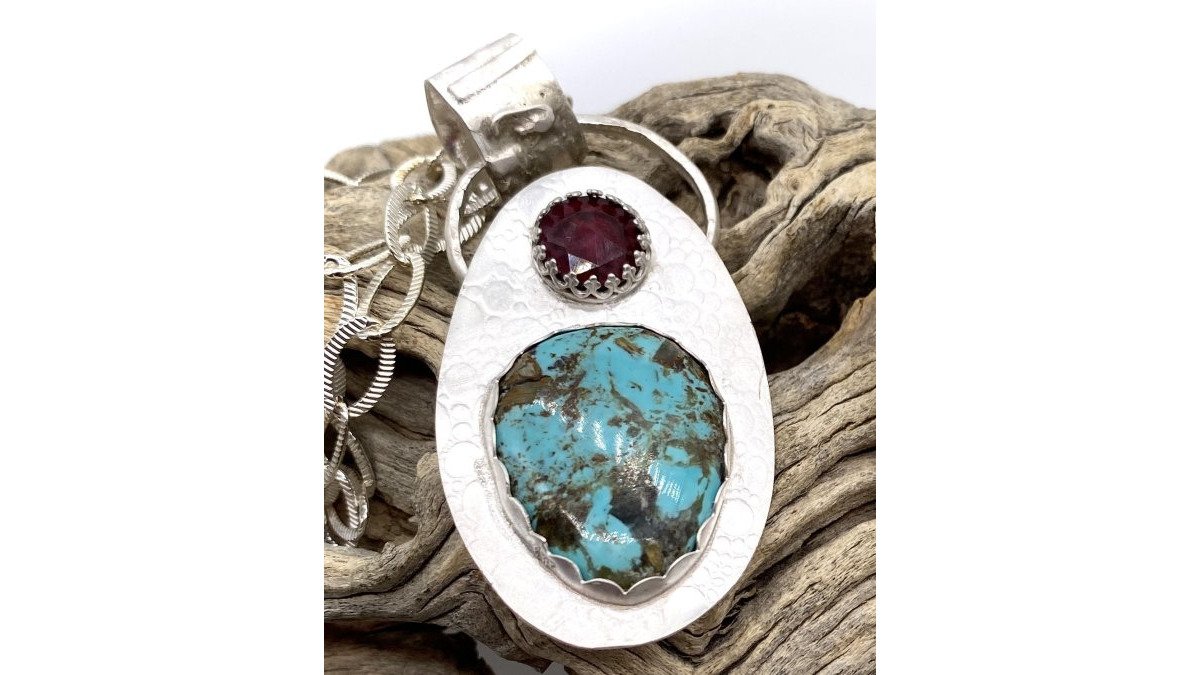
The ethics of enhancement
Stabilization is a transparent, reversible process that does not involve synthetic substitution. It is ethically distinct from dyeing howlite or coating plastic with turquoise dust. When evaluating turquoise jewelry, ask yourself: Is the seller being honest about what the stone is? If yes, stabilization is a legitimate choice, not a deception.
Test 4: Identifying Howlite and Magnesite Imitations
Howlite and magnesite are the most common turquoise substitutes. They're softer stones that are dyed to look like turquoise. Learning to spot these imitations will protect you from the most widespread fakes.
Howlite is white with natural veining. When dyed blue, it mimics turquoise but is softer (Mohs 3.5 vs. turquoise's 5-6), scratching and wearing faster. The image below show Howlite in it’s natural form. I actually love it as-is. No need to cheapen it by dyeing it.
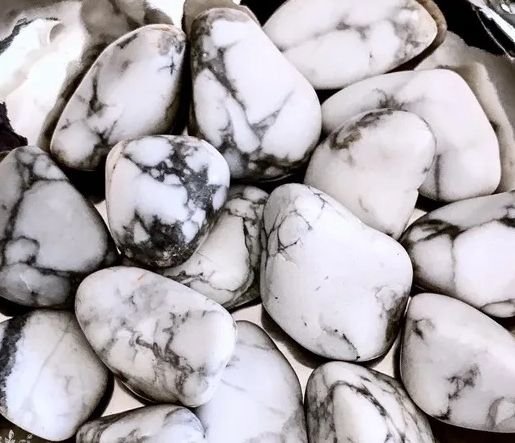
Turquoise designs Now available in my shop →
Magnesite is also white and dyed to imitate turquoise. Like howlite, it's softer and more porous, absorbing dye readily, why the acetone test is effective.
To identify these imitations: look for uniform color, test with acetone, check weight, and examine the matrix. If the stone fails any test, it's likely howlite or magnesite.
Test 5: Checking Sterling Silver Quality and Hallmarks
The metal setting reveals clues about the stone's legitimacy. Hallmarks signal the seller's investment in the piece and the likelihood that the stone is genuine.
Why metal quality matters for stone authenticity
A jeweler sourcing genuine turquoise pairs it with appropriate metals: sterling silver (92.5%), 14K or 18K gold, or high-quality copper.
Counterfeit turquoise is often set in cheap base metals or plating that tarnish quickly. If the turquoise looks perfect but the metal is unmarked or corroded, that's a warning sign.
Authentic turquoise jewelry carries hallmarks stamped into the metal: "925" or "sterling" for silver, "14K" or "18K" for gold, "copper" for copper pieces. Avoid pieces marked "gold-plated," "silver-plated," or "vermeil."
If a piece has no hallmark at all, ask the seller directly. Legitimate artisans and established retailers can provide documentation. If they can't or won't, that's a reason to shop elsewhere.
Geographic origin and sourcing
One of the most overlooked aspects of turquoise authenticity is geographic origin. All of the turquoise I use in my designs is from the Southwest and Northern Mexico.
Chinese turquoise is increasingly common in mass-market jewelry. It is often lighter in color, more uniform, and frequently heavily stabilized or dyed.
Egyptian and Persian turquoise has historical significance and distinct color profiles (often more greenish). These are legitimate sources, but they are less common in contemporary jewelry and should be clearly labeled.
Reconstituted turquoise (real turquoise fragments glued together with resin) may originate from any region but is often marketed as "natural" without disclosure. Ask sellers whether the turquoise is solid or reconstituted.
Reputable sellers will disclose origin. If a piece is labeled simply as "turquoise" with no mention of source, ask.
Connecting metal quality to stone sourcing
Artisans who source genuine, high-quality turquoise from known mines invest in quality metalwork to match. They often provide detailed information about the stone's origin, the mine it came from, and whether it is natural or stabilized. They mark their work with hallmarks and maker's marks. This level of transparency and craftsmanship is rare in mass-market or counterfeit jewelry.
When evaluating a piece, look for the complete picture: Is the metal hallmarked? Can the seller tell you where the turquoise came from? Are they transparent about whether it's stabilized? Do they stand behind the piece with a guarantee or return policy? These factors together indicate a seller who is confident in their product's authenticity and willing to be held accountable.
Test 6: The Scratch and Hardness Test
This test requires care because you're intentionally scratching the stone. Use a small area on the back or underside where scratching won't show. Real turquoise has a Mohs hardness of 5-6.
Practical Testing Summary
|
Test |
What to Look For |
Real Turquoise |
Fake Turquoise |
|---|---|---|---|
|
Visual inspection |
Color and matrix patterns |
Varied color, organic matrix |
Uniform color, geometric matrix |
|
Acetone test |
Dye transfer on cotton swab |
No color transfer |
Blue/green color appears |
|
Weight and temperature |
How the stone feels |
Substantial, stays cool |
Feels light, warms quickly |
|
Howlite/magnesite check |
Porosity and dye absorption |
Resists dye absorption |
Absorbs dye readily |
|
Hallmark inspection |
Metal quality marks |
925 or 14K marked |
No marking or plating |
|
Scratch test |
Surface resistance |
Resists light scratching |
Scratches easily |
When you're ready to invest in authentic turquoise jewelry, look for pieces that pass these tests.
For those drawn to larger statement pieces, my Transformation Sterling and Turquoise Butterfly Pendant features natural turquoise from a Nevada mine paired with sterling silver craftsmanship.
Understanding how to spot fake turquoise jewelry helps you to make confident purchases. These tests take minutes to perform and require only common household items.
Turquoise jewelry should bring you joy, not regret.
Join the Alene's Adornments Collector's List today and discover handcrafted turquoise jewelry that meets these authenticity standards. Each piece is created with intention, using genuine gemstones and quality metals.
Frequently Asked Questions
How can I test for real turquoise at home without damaging it?
The safest non-destructive tests are visual inspection, weight assessment, and temperature checks. Authentic turquoise feels substantial and stays cool longer than plastic or resin. Check for natural matrix patterns—real turquoise shows irregular, organic veining, not uniform color. Avoid acetone tests on valuable pieces; reserve that for items you're willing to risk. If you're uncertain, a professional gemologist can verify authenticity under magnification.
Is stabilized turquoise considered fake?
Stabilized turquoise is genuine turquoise that has been treated with resin or wax to improve durability and color. It's not fake, but it's also not untreated natural turquoise. The treatment fills pores in the porous stone to prevent discoloration and cracking. Reputable sellers disclose stabilization. Natural turquoise is more valuable and rarer, but stabilized pieces are legitimate and can last decades with proper care. Always ask sellers whether turquoise is stabilized or natural.
What materials are commonly used to fake turquoise?
Howlite and magnesite are the most common imitations—both are white minerals dyed to mimic turquoise color. Plastic resin and reconstituted turquoise (compressed turquoise dust bound with resin) are also widespread. Synthetic turquoise is lab-created and chemically identical to natural stone but lacks the unique matrix patterns. Howlite is softer, while magnesite feels lighter. Real turquoise has distinctive veining.
How do I know if my turquoise jewelry has real sterling silver?
Look for a hallmark stamp inside rings or on the clasp of pendants—authentic sterling silver is marked '925' or '.925', indicating 92.5% pure silver. Check the weight; sterling silver feels substantial. Examine the color; real sterling silver has a bright, cool tone and may show slight tarnish over time, which is normal. If there's no hallmark and the metal feels lightweight, it's likely not genuine sterling silver.
Sonoran Turquoise earrings. Steel drenched in 18k Gold