
9 Best Metals for Sensitive Skin Jewelry in 2026
Quick Summary
Fine silver, solid gold, and nickel-free steel are the metals most often recommended for sensitive skin jewelry, since nickel is the usual cause of reactions. Because "hypoallergenic" has no legal definition for jewelry, check the actual alloy and any plating, including clasps and ear wires, before buying.
- Nickel is the most common cause of jewelry reactions, and it can trigger a delayed rash.
- Hypoallergenic" is not a regulated guarantee, so verify composition instead.
- Fine silver is close to pure silver and comfortable for many people, but it scratches easily.
- Sterling silver is usually 92.5% silver, and nickel-plated clasps can still irritate skin.
- Copper and brass can react with skin oils and leave a green mark, so they suit occasional wear.
9 Best Metals for Sensitive Skin Jewelry in 2026
Last Updated: November 18, 2026
Many people with sensitive skin find that a single earring or ring is enough to cause an itchy, red reaction, which is why I always start with sensitive skin jewelry when a client asks for gentle options. I've spent years making jewelry in my Arizona studio, and I've learned that the metal you choose matters far more than the design.
Why Some Metals Cause Skin Reactions
Nickel is a metal that shows up in many alloys and plating baths, and it is a common cause of jewelry reactions. When nickel sits against skin, especially damp skin, or skin that is already irritated, it can trigger allergic contact dermatitis, a delayed rash that appears where the metal touches and sometimes spreads a little beyond. The reaction is not instant, and it can appear hours or days after contact.
You can become sensitized at any age, and a piercing is a classic route: a nickel-containing stud pushed through a fresh piercing exposes the immune system to nickel at a moment when the skin barrier is open.
Copper and brass are a different story. They are not usually true allergens in the nickel sense, but they can irritate, especially on dry or damp skin, and copper reacts with skin oils to leave a green mark.
That is why I ask buyers to look past the label and check the actual composition of any sensitive skin jewelry they consider. The useful questions are: What is the base metal? What is the alloy? Is there plating, and if so, what is under it? A maker who can answer those questions is a maker worth buying from.
If you already react and want to know exactly what to, a dermatologist can run patch testing, a standard panel that includes nickel, cobalt, and other common contact allergens. Patch testing tells you what to avoid; it does not tell you which jewelry to buy. I think of it as the map, and the metal list in this guide as the route.
1. Fine Silver: Low-Reaction Choice for Everyday Wear
Fine silver is close to pure silver, which makes it a comfortable choice for many people. My Sacred Spiral Fine Silver Earring, at 1 7/8" long, is hand-shaped from fine silver with sterling silver ear wires. At $80.00, it gives you a soft, textured dangle
Fine silver is softer than sterling, so it scratches more easily. Store it separately from harder jewelry. You can browse the Sacred Spiral Fine Silver Earring to see the finish up close.

Here is how the metals covered in this guide compare at a glance, drawn from the details in each section.
|
Metal |
Key detail |
Watch for |
|---|---|---|
|
Fine silver |
Close to pure silver, comfortable for many people |
Scratches more easily than sterling |
|
Sterling silver |
Usually 92.5% silver |
Nickel-plated clasps can still irritate |
|
Solid gold |
Generally well tolerated |
Alloy content varies by karat |
|
Gold-fill |
Thick gold layer bonded to brass base |
Avoid if you react to brass |
|
Steel |
Some grades are nickel-free |
Grade determines whether it is nickel-free |
|
Copper and brass |
Used in several designs |
Can react with skin oils and leave a green mark |
2. Sterling Silver: Good Option, but Check the Clasps
Sterling silver is an alloy, usually 92.5% silver with the balance made of other metals. Those other metals are where reactions sometimes come from, so ask what the alloy contains. My Sterling Silver Ring from the Sacred Spiral Collection is priced at $82.00.
Be careful with clasps and findings. A sterling piece with a nickel-plated clasp can still irritate sensitive skin.
3. Gold Jewelry for Sensitive Skin: What to Look For
Solid gold is generally well tolerated, but gold alloys vary. Higher karat gold contains more pure gold and less of the metals that cause trouble. Plated gold is different: a thin layer can wear through and expose the base metal underneath.
Gold-filled jewelry is a middle path. It has a thick layer of gold bonded to a base metal. My Gold Fill Ring from the Sacred Spiral Collection is priced at $96.00 and is made with 14K gold bonded to brass. Gold-filled pieces have a thick layer of gold bonded to a brass base, so if you react to brass, look elsewhere.

4. Gold-Fill and Steel: Nickel-Free Options Worth Considering
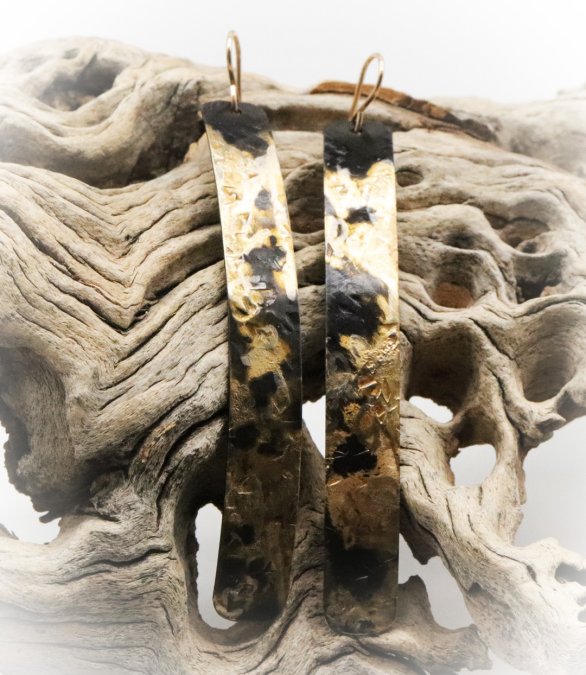
Steel comes in many grades, and some are nickel-free while others are not. The piece I make combines steel with 18K gold fused into the metal. My Golden Steel Skinny Earrings, 2 1/2" long, are priced at $110.00 and have gold-filled ear wires.

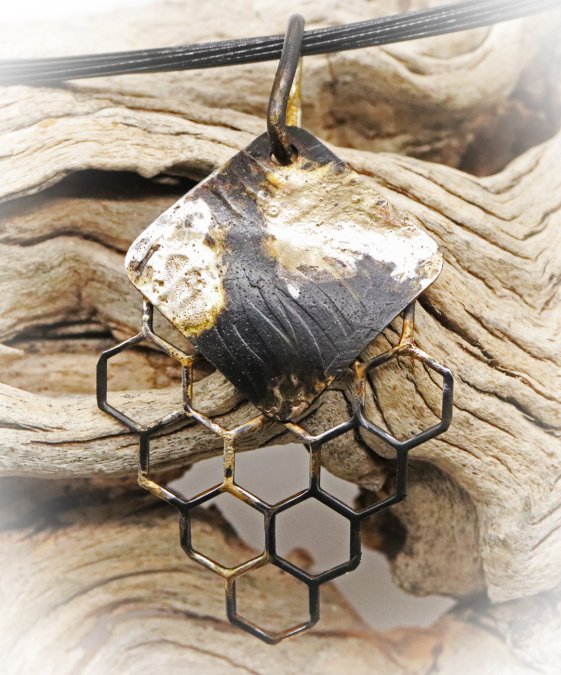
Golden Honeycomb Pendant
5. Copper and Brass: Why I Recommend Caution
Copper and brass look beautiful, and I use copper in several of my designs. My Sonoran Natural Turquoise Copper Earrings, 2" long and priced at $80.00, use antiqued copper links and copper ear wires. Copper can react with skin oils and leave a green mark, so it may suit occasional wear better than daily use.
Best Metal for Sensitive Ears: Choosing Your Piece
If your ears are sensitive, start with fine silver or gold-filled ear wires, and avoid piercing new holes with cheap plated studs.
The Marilyn Earrings combine copper, sterling silver links and Swarovski crystal, priced at $70.00. Check the ear wire material first, since that is the part touching your skin longest.
Booking Your Next Piece With Alene's Adornments
I make every piece by hand in Arizona, and I'm happy to talk through metal choices before you order. Browse the collection, or reach out for a Zoom consultation to discuss a custom design. Join my Collector's List to hear when new pieces are released.
Frequently Asked Questions
Is gold hypoallergenic?
Pure gold rarely causes reactions, but most gold jewelry is an alloy mixed with other metals such as nickel, copper, or zinc to add strength. The karat number tells you the gold share: 14K is 58.5 percent gold, 18K is 75 percent. Higher karat gold usually means fewer added metals, so it tends to be gentler. Gold-filled pieces have a thick layer of 14K gold over a brass core, so the metal underneath can still irritate if the layer wears through. Check the alloy and choose the highest karat that fits your budget.
Is sterling silver or stainless steel better for sensitive ears?
Sterling silver is 92.5 percent silver and is generally well tolerated, but the copper in its alloy and the nickel sometimes used in earring posts can cause problems. Surgical stainless steel contains nickel in its structure, so it is not a safe choice for a true nickel allergy. For sensitive ears, look for fine silver or titanium posts, which avoid these issues. Always confirm the post metal separately from the front of the earring.
What kind of metal is good for sensitive skin?
Fine silver, which is 99.9 percent silver, is one of the most comfortable options for everyday wear because it contains very little else. Titanium and niobium are also widely chosen for sensitive skin because they resist corrosion and rarely cause nickel reactions. Platinum is another low-reaction metal, though it costs more. Gold works well at 14K and above. Avoid cheap plated jewelry, since the base metal beneath the plating is often nickel or brass.
What should I do if jewelry irritates my skin?
Remove the piece as soon as you notice redness, itching, or a rash, and wash the area with mild soap and water. Stop wearing that metal for a while so the skin can settle. If the reaction lasts more than a few days, spreads, or blisters, contact a doctor or dermatologist, who can run a patch test to confirm whether nickel or another metal is the cause. Keep the piece aside so you can check its metal composition afterward.
