
7 Steps to Choose the Perfect Gemstone for Custom Rings
Last Updated: November 23, 2026
Quick Summary
To choose the perfect gemstone for custom rings, start with color, then balance beauty against durability by reading Mohs hardness and toughness together. Sapphire and ruby, both at 9 on the Mohs scale, are the safest bets for daily wear, while softer stones like opal and moonstone suit occasional wear in protective settings.
- Hue is the color family, saturation is vividness, and tone is how light or dark a stone looks.
- Sapphire and ruby both sit at 9 on the Mohs scale and hold up to daily knocks.
- Emerald and moonstone have weaker structures than their hardness numbers suggest.
- A bezel setting wraps the stone in metal and protects the edges of softer gems.
- Treatments are common and legitimate but must be disclosed; ask directly how a stone was treated.
Start With Color: How to Choose a Colored Gemstone for a Ring
Learning how to choose the perfect gemstone for custom rings starts with color, not carat weight or price tag. At Alene's Adornments, I've spent 16 years designing jewelry, and I've found that people often fall in love with a stone before they ask what it costs. Color is the first thing your eye catches and the last thing you stop noticing. So start there.
Hue, Saturation, and Tone in Plain Terms
Hue is the basic color family: red, blue, green, purple. Saturation is how vivid or muted that color reads. Tone is how light or dark it looks. A stone with high saturation and medium tone usually looks the most alive.
Here's what most guides miss: two sapphires can share the exact same hue and still look nothing alike. One reads bright and electric, the other soft and smoky. Neither is "better." You just need to know which one you keep turning toward.
The Best Gemstones for Rings: A Stone-by-Stone Comparison
The best gemstones for rings balance beauty against how well the stone survives daily life. Some are tough as nails, others need gentle handling. Below is how the most common custom-ring stones actually behave once they leave the jeweler's case. For a real-world example of how one of these stones looks in a finished piece, see this malachite and sterling silver ring.
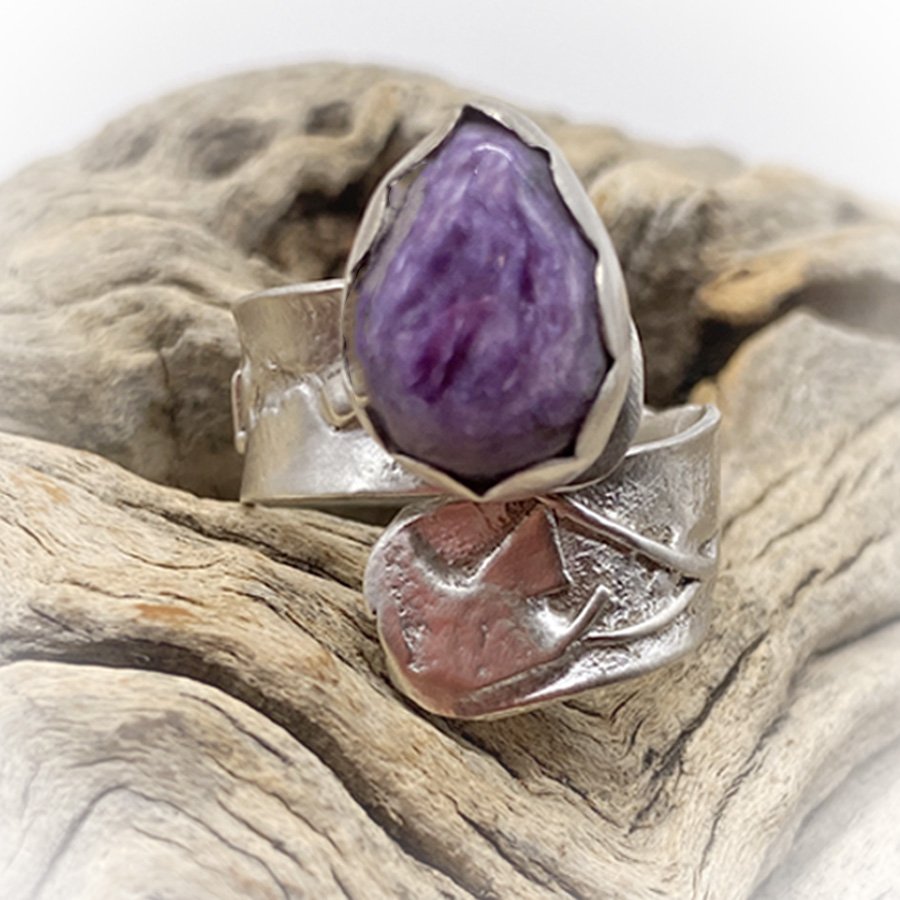
Charoite Gemstone Sterling RIng
- Sapphire: Exceptional hardness, available in nearly every color, and a genuine diamond alternative. Best all-around choice for daily wear. Most sapphires on the market are heat-treated, which is standard and disclosed; unheated stones command a premium.
- Ruby: Same mineral family as sapphire, so it holds up beautifully. Deep red stones carry real presence. Expect heat treatment and, in lower-priced stones, glass filling that affects care and value.
- Emerald: Unmatched green, but often treated and generally more brittle. Beautiful, though not the most forgiving.
- Garnet: Rich, warm color at an accessible price. My faceted garnet and textured sterling silver ring shows how a garnet can sparkle. Garnet is a family of minerals, not one stone, so hardness varies by variety.
- Amethyst: Purple with real depth and history. A classic birthstone and a favorite for statement pieces like this sterling and amethyst geode ring. Quartz-family stones are affordable but can fade with prolonged sun exposure.
- Moonstone: Soft, opalescent glow rather than hard sparkle. See how it reads in a finished piece with this antiqued moonstone ring. Moonstone has visible cleavage, so it chips more readily than its hardness number suggests.
- Opal, aquamarine, moissanite: Distinctive looks, each with its own care needs. Opal contains water and can craze if it dries out; aquamarine is generally untreated and forgiving; moissanite is lab-created, very hard, and more dispersive than diamond.
Mohs Hardness and Durability at a Glance
The Mohs hardness scale ranks minerals from 1 (talc) to 10 (diamond) by scratch resistance (Natural Gemstones). It tells you how easily a stone scratches, not how easily it chips. Read the hardness and toughness columns together, because a high hardness number can hide a brittle structure.
Gemstone |
Mohs Hardness |
Toughness |
Best For |
|---|---|---|---|
Diamond |
10 |
Good |
Everyday wear |
Sapphire |
9 |
Excellent |
Everyday wear |
Ruby |
9 |
Excellent |
Everyday wear |
Emerald |
7.5-8 |
Fair |
Occasional wear |
Garnet |
6.5-7.5 |
Good |
Daily wear with care |
Amethyst |
7 |
Good |
Daily wear with care |
Moonstone |
6-6.5 |
Fair |
Gentle, occasional wear |
Opal |
5.5-6.5 |
Poor |
Special occasions |
Mohs Hardness
How to Read the Table Like a Jeweler
Hardness tells you what will scratch the stone; toughness tells you what will break it. A stone at 9 on the scale can still crack if it has strong cleavage or inclusions, and a stone at 7 can wear well for years if it sits in a protective setting.
Watch out: buying a soft stone because the color is perfect, then setting it in an exposed prong setting, is the most common way a beautiful custom ring becomes a repair bill.
Best Stones for Engagement Rings Durability: What Survives Daily Wear
If you want a stone that survives years of desk edges, car doors, and gym sessions, sapphire and ruby are the safest bets. Both sit at 9 on the Mohs scale, and both hold up to knocks that would damage softer stones.
Diamond alternatives deserve a fair look here. Moissanite is hard and bright. Sapphire comes in every color and costs far less than a comparable diamond. Neither is a compromise; both are smart choices.
Hardness Is Not Toughness: Cleavage and Chipping
A hard stone can still chip. Toughness measures resistance to breaking, and cleavage describes how a mineral splits along internal planes. Emerald and moonstone have weaker structures than their hardness suggests. A moonstone ring like this faceted moonstone piece looks stunning, but it wants a protective setting and mindful wear. Turquoise is softer still, which is why a natural turquoise ring suits someone who accepts a little care.
Cut, Shape, and Brilliance: Judging Quality Beyond the 4 Cs
Cut is the quality factor most buyers underrate. A well-cut stone throws light back at you; a poorly cut one looks flat no matter how good the color is. Brilliance is that light return. Faceting creates it.
The standard 4 Cs are color, clarity, cut, and carat weight. Clarity matters less in colored stones than in diamonds, because color often hides small inclusions. Carat weight is simply size. Balance all four against your budget rather than chasing one number.
Match the Stone to Your Style, Meaning, and Lifestyle
Style and symbolism matter as much as specs. A rose quartz ring carries a meaning of love and compassion, which makes it a natural choice for a gift or a personal talisman. Browse this rose quartz sterling silver ring to see how that symbolism translates into a finished design.
Think about your life, too. If you're active, pick a harder stone. If the ring is for occasions, a softer gemstone gives you more color options. A common mistake is buying for the fantasy version of your life instead of the real one.
Setting, Sourcing, and Disclosure: What to Ask Before You Commit
Most guides stop at color and hardness. The questions that actually protect your purchase come later: what was done to the stone, where it came from, how the setting shields it, and what paperwork backs up the seller's claims. Ask these before you commit.
Treatments and Enhancements: What to Disclose
Treatments are common and legitimate, but they must be disclosed. Heat treatment on sapphire and ruby is standard and stable. Fracture filling on emerald improves clarity but makes the stone more sensitive to heat, chemicals, and ultrasonic cleaning. Irradiation is used on some colored stones to change color, and diffusion treatment can alter a sapphire's color at the surface. The Federal Trade Commission's jewelry guides set out what sellers must disclose, so ask directly: Is this stone treated, and how? A seller who hesitates is a seller to walk away from.
Origin, Sourcing, and Traceability
Ask whether the stone is natural or lab-grown and where it originated. Lab-grown stones are real gemstones with the same optical and physical properties, but they trade at different prices and should be labeled clearly. For natural stones, origin affects value and, for some buyers, peace of mind. Reputable sellers answer sourcing questions without hesitation and can often name the country or region. If traceability matters to you, say so early, because it narrows the stone list and may extend the timeline.
Certification and Independent Appraisal
A gemological report from a recognized lab verifies identity, treatments, and sometimes origin; an appraisal assigns a replacement value for insurance. They are not the same document. For a significant custom piece, ask whether the stone comes with a report and whether an independent appraisal is available after setting. Treat a seller's verbal claims as a starting point, not proof.
Setting Choice and Stone Protection
Settings matter more than people realize. A bezel setting wraps the stone in metal and protects the edges, ideal for softer gems. A prong setting shows more of the stone but leaves it exposed; four prongs show more stone, six prongs hold it more securely. Stones with cleavage, like emerald and moonstone, benefit from a bezel or a halo that shields the girdle. For a low-hardness gemstone, bezel is the smarter call.
A Practical Sequence for a Custom Ring
A custom ring moves through a predictable sequence: choose the stone and confirm treatments and origin, approve a design and setting, source the stone, set it, and inspect the finished piece. Ask the jeweler what happens at each stage, who inspects the stone before setting, and what the return or repair policy is. Getting the sequence in writing prevents surprises.
Watch out: skipping the disclosure conversation because the stone is beautiful is the most common way buyers end up with a piece they cannot safely clean or insure.
Gemstone Ring Care and Maintenance for the Long Run
Clean most gemstones with warm water, mild soap, and a soft brush.
Store pieces separately so harder stones don't scratch softer ones. When in doubt, have a jeweler look at it.
Designing Your Custom Ring With Alene's Adornments
A custom ring is a conversation, not a transaction. I handcraft every piece in my Arizona studio, source each gemstone personally, and buy metals from reputable jewelry supply shops.
Here's how I'd approach your ring: bring a color you love and a rough budget. A Zoom consultation works if you're not local, and if you're wondering about turnaround, read how long custom jewelry takes.
Choosing a gemstone means balancing color, durability, and meaning, and that takes a real conversation.

Frequently Asked Questions
What gemstones are best for everyday rings?
Sapphire, ruby, and diamond hold up best for daily wear because they resist scratching. Quartz-family stones like amethyst and garnet are softer and show wear faster in a ring worn constantly. Moonstone and opal need more protection. If you want a stone for a ring you never take off, choose a hard one and set it in a bezel. If you love a softer stone, wear it for occasions and store it separately.
Can any gemstone be used in a custom ring?
Most can, but the setting has to match the stone. Soft or brittle gems such as opal and moonstone do better in a bezel or protected setting than in tall prongs. Very large or unusually shaped stones may need a custom seat built for them. During a consultation I check the stone's hardness, cleavage, and size, then recommend a setting that keeps it safe.
How do gemstone color and cut affect a ring's appearance?
Color sets the mood and cut controls how light moves through the stone. A faceted cut throws sparkle and hides small flaws, while a cabochon shows color and pattern in a smooth dome. Saturation matters more than exact hue: a deeply saturated stone looks richer than a pale one of the same type. Tone interacts with your skin and the metal. Warmer skin often suits yellow gold and warm stones, while cool skin pairs well with white metals and blues or purples.
How should I care for a gemstone ring?
Put the ring on after lotion, perfume, and hairspray, since those products dull stones and metals. Clean most gemstones with lukewarm water, a drop of mild soap, and a soft brush, then dry with a microfiber cloth. Store each piece in its own compartment so harder stones do not scratch softer ones. Have prongs checked periodically, and reapply lacquer on copper pieces if the finish softens.
